June 29, 2026
5 min read
Our Artists: Jędrzej Chojnacki – “Kindness as a rebellious act”
Share this article
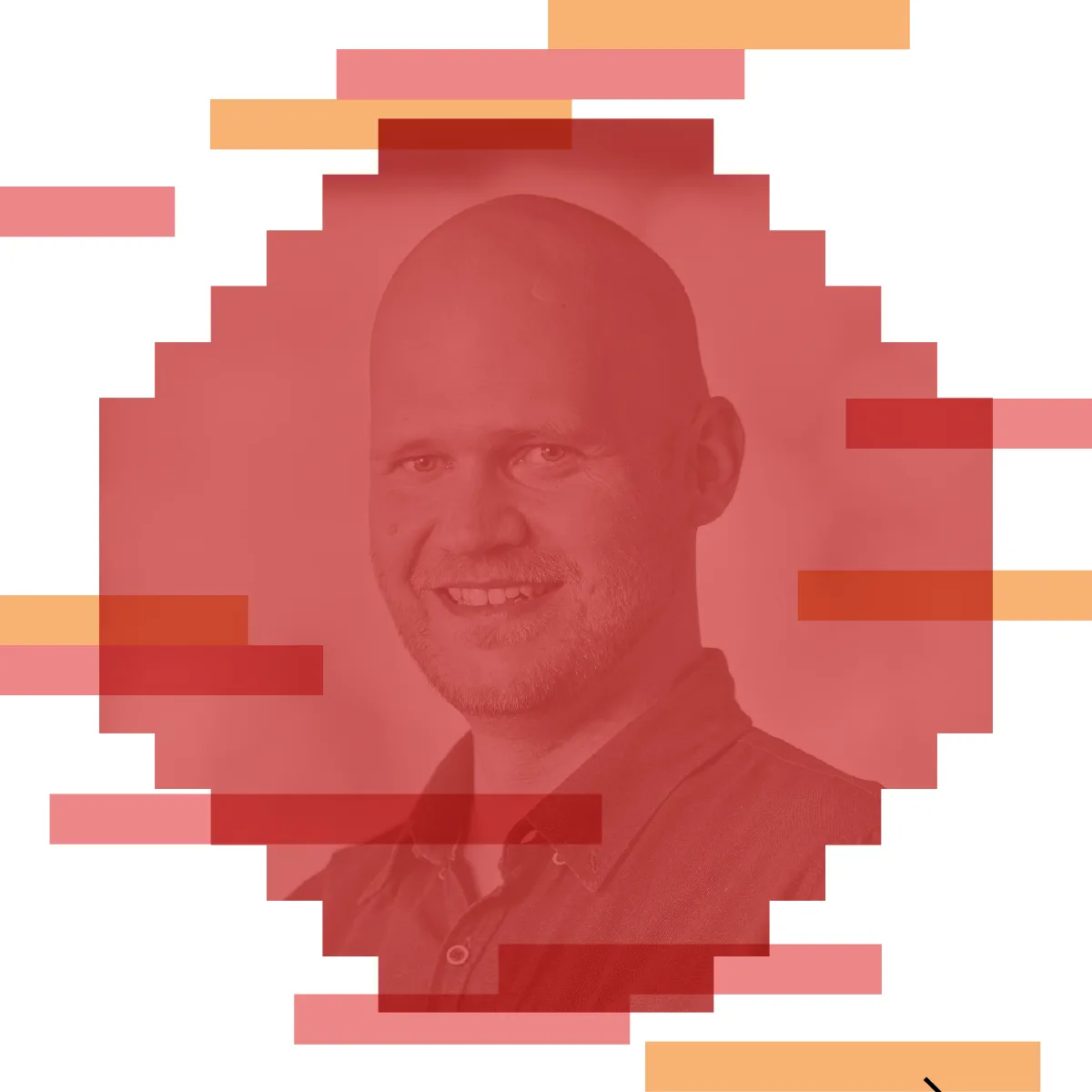
When asked how creating makes him feel, Jędrzej reaches for a concept. It’s not joy or flow, although those appear too. He names it precisely:
Chrysalism.
That rare sensation of being so absorbed in the process that the outside world simply stops, like being cocooned. Lost in the work. Lost on the sofa. Somewhere between boredom and euphoria, fully present.
Jędrzej is a communication expert and brand designer at Admind, someone who, over the years, has shaped how ideas are conveyed and how brands find their voice. But before the briefs and strategy sessions came illustrations. And before the illustrations, there was the internet.
He describes his creative origins with a certain dry candour: ‘I crawled out of a dungeon of internet reactionary satire.’ What emerged from that dungeon, though, is the opposite of cynicism. Today, Jędrzej’s work is driven by a quietly radical idea: that kindness is an act of resistance.
Not passive kindness. Not palatable, inoffensive kindness. The kind that costs something. The kind that shows up anyway.
“Kindness as a rebellious act of resistance.”
It’s a statement, not a description. And that’s the point.
In a creative landscape saturated with irony, detachment and aesthetic cool, choosing kindness as a creative stance requires courage. Jędrzej knows this. He has deliberately embraced the tension.
Fear and joy. Boredom and euphoria. Sometimes all simultaneously at once.
He doesn’t provide a neat answer here because there isn’t one. For Jędrzej, the creative process is emotionally intense.. simultaneously uncomfortable and invigorating. Then there’s chrysalism: that state of deep absorption where time dissolves and the work takes over.
‘That’s what you get when you’re lost in the process and lost on your sofa.’
It’s not quite rest. It’s not quite work either. It’s something in between, and for Jędrzej, it’s where some of his most honest creations come to life.
The revolutionary and heroic small acts of everyday kindness.
It hasn’t always been this way. Initially, inspiration came in random bursts, with ideas arriving seemingly without pattern or logic. But something shifted. The catalyst became clearer and more specific: not grand gestures or monumental moments, but the ordinary things that people do for each other every day and which are often overlooked.
He describes these acts as revolutionary and heroic, and he means it. In a world that rewards loudness, choosing to be kind quietly, consistently and without fanfare is a form of rebellion in itself.
Theme: reverting expectations. Material: brush ink.
The transition from internet satire to compassion-driven illustration wasn’t a clean break; it was a reorientation. Jędrzej kept the edge, the timing and the taunt. He just changed what came after it.
“I like to taunt with cynicism, only to follow up with compassion and care.”
It’s a particular kind of storytelling – one that achieves an emotional impact by subverting expectations. The form sets up the subversion. The subversion delivers the feeling.
As for technique, he’s tried many. Brush ink remains his favourite. There’s a directness to it – you can’t undo a mark and there are no infinite iterations. The gesture is the work.
Intuition first. Planning later – and only if necessary.
He acknowledges that some projects require structure from the outset. However, the process usually begins with a feeling, an image or an instinct, and any plan that emerges is created afterwards to organise what already exists.
This isn’t chaos. It’s about trust. It’s trusting that the initial idea is worth pursuing and that over-planning can stifle a concept before it has a chance to develop.
He’s a storyteller, and that changes everything.
‘I’m a storyteller, and that helps me with the communication work I do at Admind.’
At its core, the process behind Jędrzej’s illustrations and client work is the same: he finds the shape of an idea and makes it legible, surprising or moving. The medium changes. The instinct doesn’t.
And the influence runs both ways. Working alongside Admind’s creative team, discussing projects, questioning assumptions and navigating complex briefs has broadened the scope of his personal work. Professional and artistic practice feed each other.
It’s exhausting. And that’s exactly the point.
He reaches for a mountain-climbing analogy: the ascent is arduous, your legs burn, and yet you feel more invigorated at the summit than you would after a passive afternoon.
‘Creating things can be frustratingly exhausting, but you feel more recharged after climbing a mountain than after binge-watching a TV show.’
But there’s more to it than just recharging. For Jędrzej, art is a way of taking risks — something he finds difficult in everyday life, so he practises it on the page instead. It’s also where he most deliberately wants to express kindness and joy. Not as decoration. As resistance.
He leaves a quote – and a promise.
The quote is Kurt Vonnegut’s:
The promise is his own: every realised flawed idea prevents you from becoming a consumer.
Not a finished idea. Not a good idea. A realised one. Made, shared, let go.
Jędrzej’s approach is useful for anyone working in communication, narrative or brand-building.
He doesn’t start with a message and then find images to match it. Instead, he starts with an instinct – a feeling about what’s true – and works outward from there. The result is work that doesn’t announce itself. It arrives unexpectedly and makes a greater impact as a result.
At Admind, this is exactly how strong brand communication works:
Jędrzej’s creative identity – storyteller, risk-taker, quiet radical – doesn’t disappear when he opens a brief. It sharpens.
Jędrzej didn’t wait for a message that was worth saying. He just kept creating things until the message found him.
What he discovered was this: practising kindness with intention and without apology is one of the most subversive things a person can do.
Start imperfectly. Start anyway. Don’t become a consumer.
_____________________
Our Artists is a monthly Admind series. Each edition introduces one Admind artist and the creative work they do beyond the brief.