June 02, 2026
7 min read
Branding in insurance – why the industry that sells trust has a trust problem
Share this article

Most industries sell products that customers can see, touch or use immediately. Insurance does not sell any of these things. Instead, it offers the reassurance that, should the worst happen, whether that be a fire, an illness, an accident or a death, someone will be there. The product only exists in moments of crisis. In the years between those moments, the brand is the only evidence that the promise is real.
This makes insurance branding one of the most important yet consistently underinvested disciplines in the corporate world.
We have worked with financial services organisations, insurers and regulated businesses to answer the question of how to build and maintain brands that sustain trust across markets, geographies and distribution channels. The pattern is consistent: the technical and actuarial work is rigorous and the compliance frameworks are robust, yet the brand conversation either happens too late, as a visual refresh after a strategic shift, or not at all, being subordinated to distribution economics and product pricing.
This article is for insurance leaders who want to change that. Not because branding is a soft priority, but because the data on the consequences of getting it right or wrong makes the case more clearly than any creative argument.
It matters precisely because the product is intangible. When a customer buys a car, the car itself is evidence of the purchase. When a customer buys an insurance policy, however, they only receive a document. The value of the product (the actual protection) only exists as a belief. Brand is what makes that belief durable.
The relationship between brand strength and commercial performance in insurance can be measured. A 2024 J.D. Power study of commercial insurance customers found that 81% of those who trusted their insurer the most said they definitely intended to renew their policy, and 79% said they would definitely recommend their provider. Trust is not a soft metric in insurance; it is a retention and growth metric with direct profit and loss consequences.
The downside of a trust deficit is equally quantifiable. A 2025 Forrester Research study found that health insurance customers with low trust are 10.3 times more likely to switch brands than those with high trust – up from 2.4 times more likely just one year earlier. The trust gap in health insurance is not narrowing. In fact, it is widening. The cost of this erosion is measured in churn, not sentiment.
For property and casualty insurers, the situation is only marginally better. The Edelman Trust Barometer places the global P&C insurance sector in the 53–59 range, technically neutral and not trusted at all. It is an industry that sells trust as its literal product, yet has yet to earn it as a consistent brand outcome.
The financial stakes extend beyond retention. Brand equity (the premium that customers are willing to pay for a well-known, trusted brand rather than an equivalent unknown one) is the main way in which insurers can avoid the price competition that makes their products seem like commodities.
Bain & Company research has found that policyholders are willing to pay significantly higher premiums for insurers that deliver beyond the functional basics, such as ethical behaviour, reduced anxiety and the sense that the company is genuinely on their side. This premium is brand equity expressed as pricing power. Insurers that don’t invest in their brand will lose it.
Understanding these constraints is the first step to addressing them.
Unlike with a hotel brand, where the experience either confirms or refutes the brand promise with every stay, an insurance brand makes its promise at the point of purchase and is not tested until a claim is made. This gap can span years or even decades. Maintaining brand salience and emotional relevance throughout a relationship with no positive touchpoints represents a genuine strategic challenge which most insurers have yet to solve systematically.
In commercial lines especially, brokers, agents and intermediaries manage the customer relationship in a way that fundamentally alters what the insurer’s brand can communicate directly. An insurer with a compelling brand proposition often finds that their value story is filtered, simplified or replaced by the broker’s relationship with the client. Building a brand that operates through an intermediary layer, rather than being absorbed by it, requires deliberate architectural planning, which most insurer brands have not developed.
Insurance is one of the most heavily regulated product categories in most markets. The degree to which brand communication can be as free as in consumer goods or technology is limited by what can be promised, how it can be stated, and what must be disclosed. This pushes brand expression towards the functional and literal, towards descriptions of coverage rather than articulations of identity.
Products such as life insurance, critical illness insurance and liability insurance are organised around things people fear. Most insurance marketers instinctively activate that fear to motivate purchase. However, the most effective insurance brands acknowledge the fear and then reframe themselves as the entity that removes it. The difference between these two approaches (activating fear versus resolving it) is the difference between a transactional brand and a trusted one.
The emergence of InsurTech challengers has made speed, transparency and simplicity commonplace rather than setting them apart. Legacy carriers that invest in digital interfaces without investing in the underlying brand conviction discover that, while a fast digital journey through an emotionally empty experience produces high customer satisfaction scores, it does not produce loyalty.
The most common mistake is to treat the brand as a communication problem rather than a behavioural one. Insurers often invest in a new visual identity, tagline or advertising campaign, only to deliver a claims experience that contradicts everything the brand has communicated. Nowhere is the discrepancy between brand promise and operational delivery more immediately and painfully apparent than in insurance.
The most instructive insurance branding moments are not stories of successful marketing campaigns. They are stories of what happens when brand strategy meets organisational reality, and of whether the organisation is prepared for that collision.
For over thirty years, Snoopy represented MetLife. In 1985, the Peanuts characters were introduced to solve a specific problem: to make the large, cold insurance company seem approachable and human to everyday American consumers. It worked – for its time. Snoopy gave MetLife a genuinely warm personality in a category that had almost none.
However, in 2016, MetLife retired Snoopy entirely. The official reason was a strategic pivot: The company was spinning off its US consumer life insurance business as Brighthouse Financial and refocusing on group insurance and international markets. The consumer-friendly warmth of Peanuts no longer matched the brand’s repositioning towards institutional and corporate clients. The brand that Snoopy had built (friendly, familiar and accessible) was precisely the brand that MetLife was leaving behind.
The lesson here is not that Snoopy was wrong. Rather, the lesson is that a brand character built for one strategic era can become a liability in the next, and the decision to retire it must be made in line with the repositioning, rather than as a consequence of discovering it too late. MetLife’s Snoopy era ended cleanly because the business rationale was clear. Many insurance brands have similar legacies in the form of mascots, taglines and visual styles that no longer align with their strategic direction. However, they have not yet found the courage or strategic clarity to address this issue.
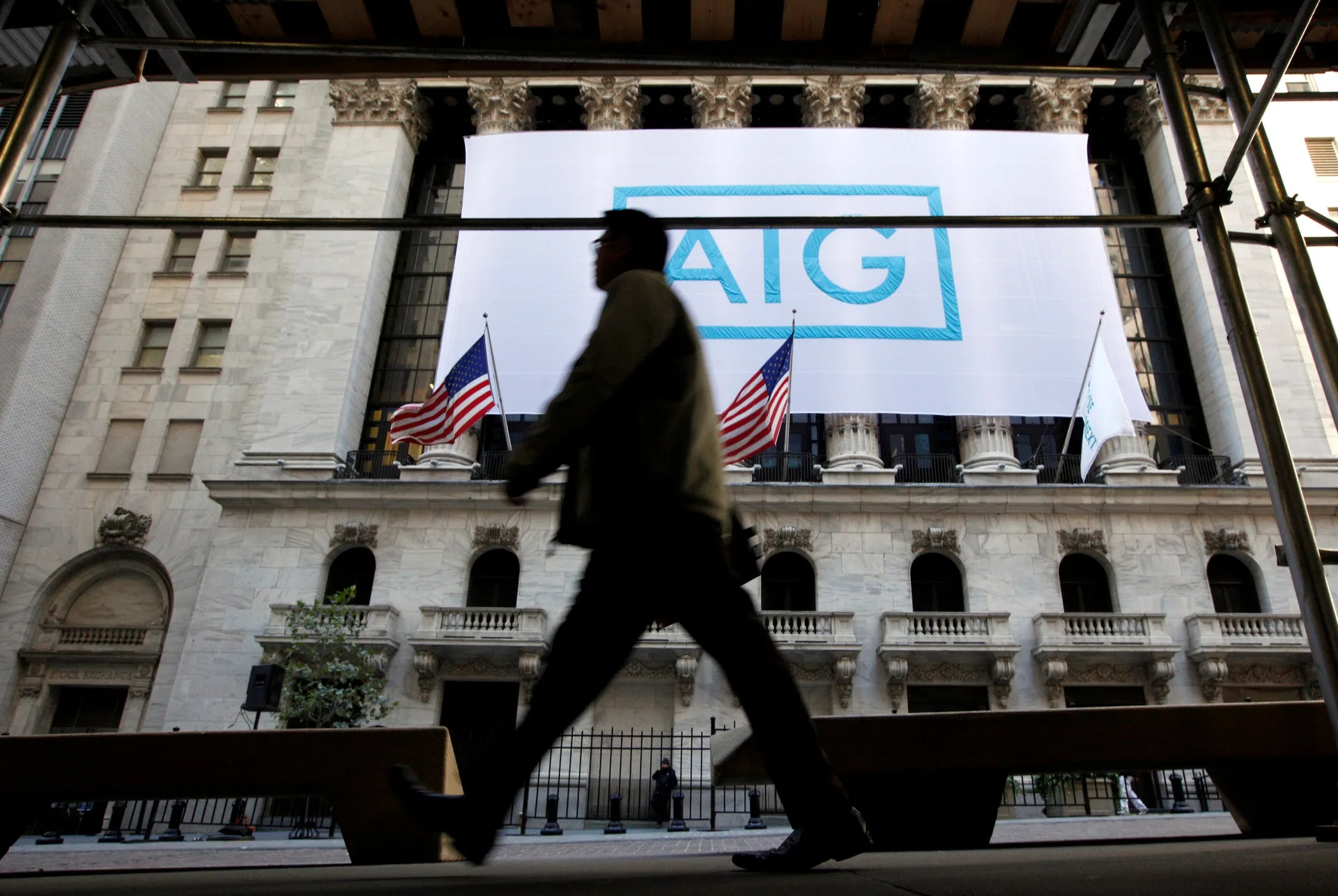
The 2008 financial crisis resulted in the most dramatic brand rehabilitation in the history of the insurance industry. After its financial products division’s bets on credit default swaps threatened global market stability, AIG required a $182 billion government bailout – the largest in US history. For a time, the AIG name became synonymous with systemic risk and corporate failure.
The initial response was a textbook example of crisis brand management: distance. AIG quietly renamed its property and casualty division Chartis and rebranded its financial advisory and retirement businesses under different names, effectively creating corporate distance from a toxic brand. For three years, Chartis operated as though AIG had not existed.
Then AIG did something unusual: it came back. Having repaid the full $182 billion to the US government with profit in 2012, AIG reclaimed its name, launched a ‘Bring on Tomorrow’ repositioning campaign and recommitted its brand to its original identity. This reclamation was successful because AIG had earned the right to its name through its demonstrated behavioural change, rather than through communication. The repayment was not a marketing story. It was an operational fact. The fact that a company which had taken $182 billion of public money returned it in full was the foundation on which the brand could be rebuilt.
The lesson is that insurance brands can survive almost anything, but only if they recover behaviourally before communicating their recovery. Rebranding that precedes demonstrated change is a liability. One that follows it, however, is an asset.
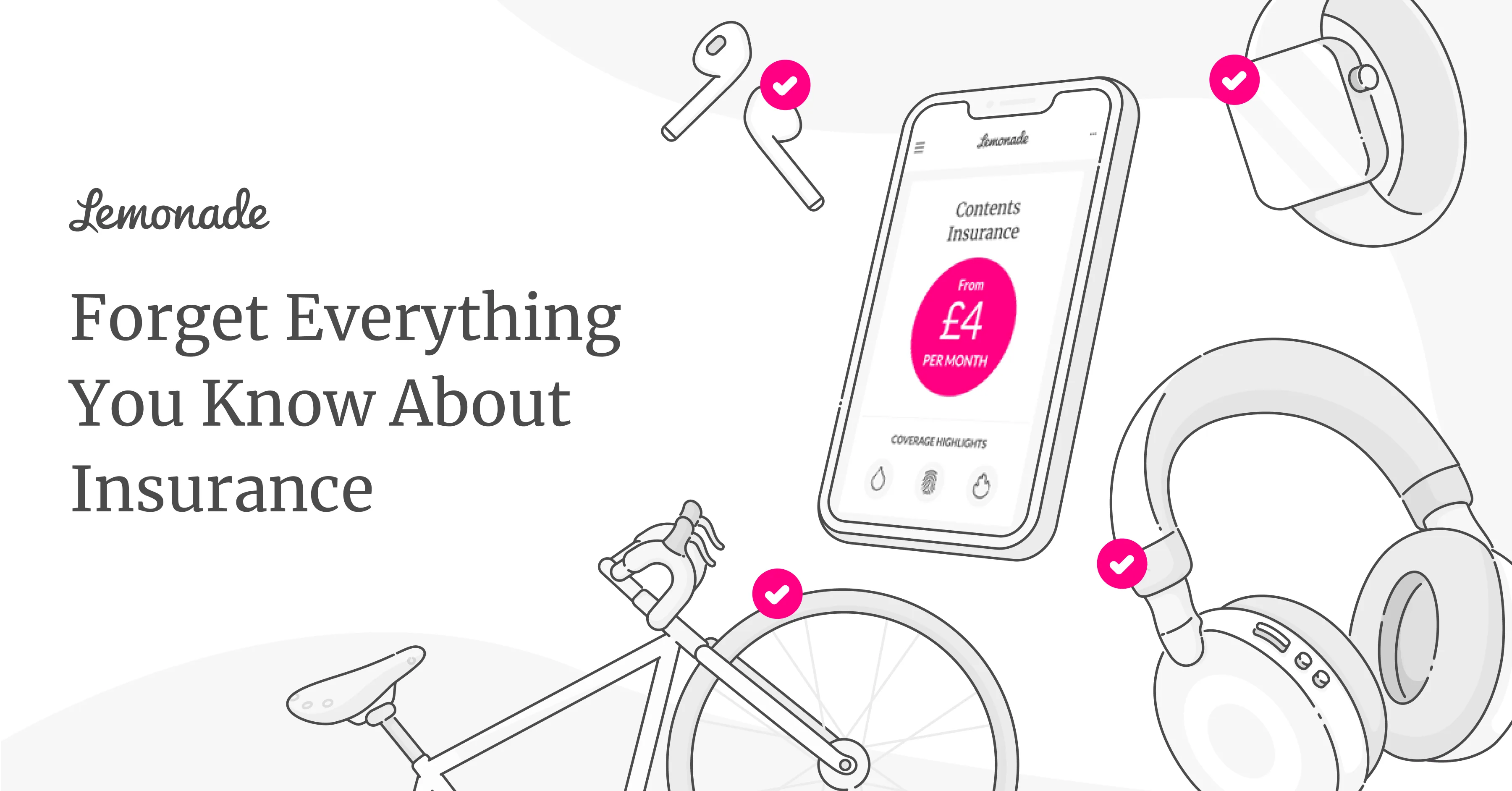
Lemonade was launched in New York in 2016 with a proposition that was both a brand and a business model: insurance without a conflict of interest. By taking a flat fee from each premium and donating unused claims funds to the charities chosen by policyholders – a programme it called Giveback, Lemonade eliminated the misalignment between insurer profit and policyholder claims that had defined the category for centuries.
Its brand expression matched this proposition: bright colours, a conversational tone and an app-first experience that resolved most claims in under three minutes. While traditional insurance brands communicated in the language of security and stability, using deep blues, serif typography and an air of institutional gravity, Lemonade communicated in the style of a consumer technology company. It was designed to appeal to younger customers who had grown up associating traditional insurance brands with parental obligation rather than personal choice.
The results were commercially significant. Lemonade surpassed $1 billion in annual premiums in under nine years, achieving a compound annual growth rate of approximately 150%. This demonstrated that a category historically organised around institutional trust could be disrupted by a brand organised around transparency and personality.
The lesson is not that every insurer should emulate Lemonade. Rather, the lesson is that the category’s visual language was so homogeneous that a single brand with genuine conviction could establish an entirely different emotional connection and attract a generation of customers who had previously been overlooked by traditional insurers. Lemonade asks every incumbent insurance brand: what is our actual distinct position, expressed in something other than a colour palette and a logo?
This case does not feature a single company name because it is not the result of a single failure; rather, it is a structural pattern. Commercial insurance carriers in markets dominated by brokers regularly discover, when a significant claim is made, that their end customer has no meaningful awareness of or loyalty to their brand. The customer’s relationship is with the broker. The insurer is merely a counterparty.
When claims are handled well, it is the broker who managed the process that gains the loyalty. Conversely, when claims are handled poorly, the liability goes to the insurer, whose brand now exists only as the entity that failed to pay. Despite bearing all of the underwriting risk, the insurer receives none of the relationship equity. This is not an inevitable consequence of broker distribution. It is the result of insurers that have never invested in establishing a direct brand presence outside of the spaces owned by brokers.
Strong insurance branding starts with a decision about what the brand is actually for — not as a communication aspiration, but as an operational commitment. The insurers with the strongest brands have answered a question that most have left unanswered: are we selling a product or building a relationship? The answer determines everything that follows.
Anchor the brand in behavior, not aesthetics.
The visual identity of an insurance brand is important. Consistency, recognition and professional execution are essential. However, the visual identity is merely a carrier for the brand’s behavioural commitments, not a substitute for them. An efficient, empathetic and customer-focused claims experience is a brand asset worth more than any campaign. The most powerful insurance brand investments are often operational: claims communication design, the first-notice-of-loss experience, loss adjuster training and digital self-service with effective human escalation. These are brand decisions, not service delivery decisions.
Define the brand’s position on the trust spectrum explicitly.
Insurance brands can occupy a range of positions, such as institutional authority, personal advocacy, radical transparency and community solidarity. Each position is defensible. However, none of these positions are occupied by default — each requires deliberate expression across every touchpoint, including those outside the control of the marketing team. A brand that has not decided what kind of trust it is building will default to the weakest version of all of them: compliance communication dressed up as warmth.
Integrate the brand into the distribution process.
In markets where broker channels dominate, the brand strategy must consider how the insurer can be present without disrupting the broker relationship. Moments such as onboarding communications, claims acknowledgement, renewal correspondence and risk management content are opportunities for the insurer to either reinforce a brand proposition or waste the opportunity entirely. Every direct communication leaves a brand impression. Most insurers treat direct communications as administrative documents.
Govern the brand across the organisation’s geographical scope.
Insurance organisations typically operate across multiple geographical areas, product lines and legal entities. Each of these has its own version of the brand, and without systematic governance, these versions diverge. For example, a policy document in one market may use different language to a website in another. A claims letter uses a different tone to the advertising campaign. Customers who interact with the brand across multiple touchpoints receive inconsistent signals, and inconsistency is perceived as unreliability. In an industry where reliability is the core promise, brand inconsistency is not just an aesthetic problem. It is a trust problem. A Brand Operating System, centralised standards, accessible assets and clear governance protocols, is the infrastructure that maintains legibility at scale.
Invest in the brand before the crisis, not during it.
Insurance organisations that have demonstrated the greatest brand resilience during periods of systemic stress, such as financial crises, years of catastrophic claims and regulatory investigations, are those that had built genuine brand equity prior to the stress occurring. Brand equity is reserve capital. It does not accrue during a crisis; it is drawn down during one. The question that every insurance brand should ask in stable years is: how much reserve capital are we building up?
We work with financial services organisations, insurers and regulated businesses at every stage of the brand lifecycle, from initial brand strategy and architecture to identity development, governance infrastructure and the ongoing operational work of maintaining brand consistency and coherence across markets, channels and organisational units.
Our experience in insurance and financial services has consistently shown us that organisations that invest in branding as a strategic input rather than a marketing output build more durable customer relationships, achieve stronger retention economics and navigate moments of reputational stress with greater resilience than those that treat branding as a design function.
The insurance sector’s trust deficit is no mystery. It is the predictable consequence of an industry that has prioritised product, distribution and compliance, treating the relationship dimension of its business as secondary. The brands that will lead the insurance sector in the next decade are not those with the largest advertising budgets. They are the ones that understand their promises, create the operational reality to fulfill them, and govern their brands with enough discipline to deliver consistent experiences that inspire trust.