- Filter Name
-
Client
Sika
-
Industry
Specialty chemicals
Executive Summary
Sika is a global specialty chemicals company developing systems for bonding, sealing, damping, reinforcing, and protecting in construction and industrial sectors. Operating in over 100 countries, it delivers solutions used in concrete, waterproofing, roofing, flooring, and a wide range of industrial applications.
As the organization expanded across markets and channels, it faced growing challenges in maintaining consistency in how complex product systems were communicated. Materials were often developed locally, which made it harder to ensure alignment, reuse existing assets, and communicate solutions clearly to non-technical audiences.
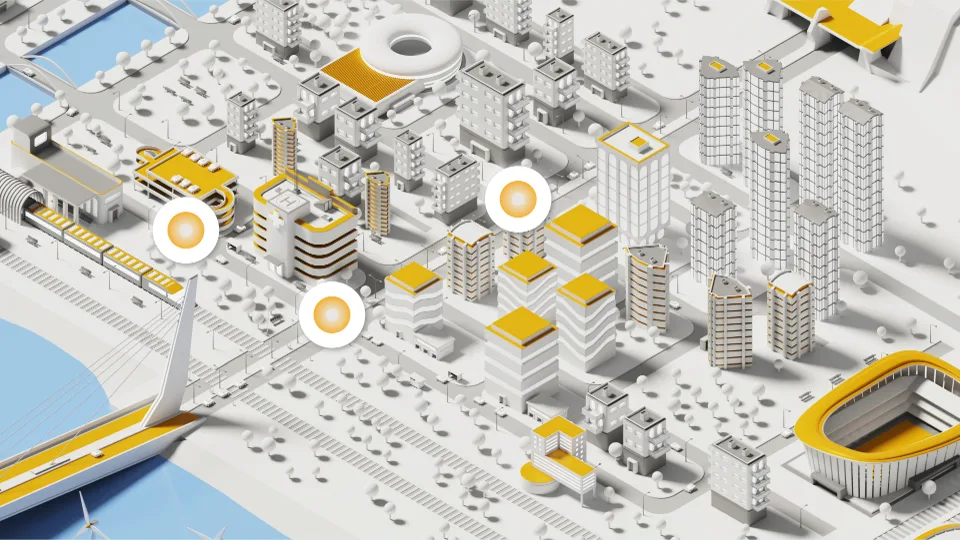
Admind supported Sika in developing a scalable illustration and animation system, designed to present products in the context of their real-world application. The system introduced a modular structure and multi-level storytelling – from system overview to technical detail.
As a result, Sika improved consistency across markets, reduced fragmentation of materials, and enabled more efficient content production across teams.
Client & Context
Sika is a global B2B organization operating in the specialty chemicals sector, with a strong presence across construction and industrial markets. The company serves a wide range of stakeholders, from engineers and architects to contractors and business decision-makers.
Its communication needs to balance technical precision with clarity, often across multiple channels such as sales materials, digital platforms, and events. At the same time, content is created by distributed teams across different markets.
Over time, this led to increasing complexity. While many materials existed, there was no shared visual approach to explaining how products function within larger systems. This made it more difficult to ensure consistency and limited the ability to scale content production efficiently.
Business Challenge
The main challenge was to support a more consistent and scalable way of communicating complex product systems across markets.
In practice, this meant addressing:
- differences in how solutions were presented across regions,
- limited reuse of existing materials,
- challenges in explaining technical products to broader audiences.
This became more relevant as the number of communication touchpoints increased and the need for alignment across markets grew.

Strategic Decisions
A key decision was to shift from product-focused visuals to a more contextual, system-based approach.
Option A – product-focused communication
Clear and fast to produce, but limited in explaining how solutions work in real environments.
Option B – system-based communication
More complex to design, but better suited to show application, relationships between elements, and overall value.
The system-based approach was selected, as it better reflected how Sika’s solutions function in practice and supported consistency across use cases.
A second decision was to build the solution as a modular system, rather than a fixed set of assets. This allowed teams to reuse elements and expand the system over time without losing coherence.
Objectives & Success Metrics
The project focused on a set of operational objectives:
- Improve consistency across markets
→ a shared visual approach applicable in different regions and channels - Increase clarity of product communication
→ better understanding for both technical and non-technical audiences - Enable reuse of content
→ reduced need to create materials from scratch - Support more efficient content production
→ faster development of new materials using existing components - Create a system that can evolve over time
→ ability to extend and develop the system without losing consistency
To be confirmed before publication:
- system adoption (e.g., number of markets or teams using the system),
- reduction in content production time,
- number of assets or materials created using the system.

Execution (System)
The solution was developed as a structured visual system supporting different types of communication.
Visual structure
An isometric grid was introduced to ensure spatial consistency and clarity across all illustrations. This created a common foundation for all visual elements.
Multi-level communication
The system allows communication at three levels:
- city level – overall context,
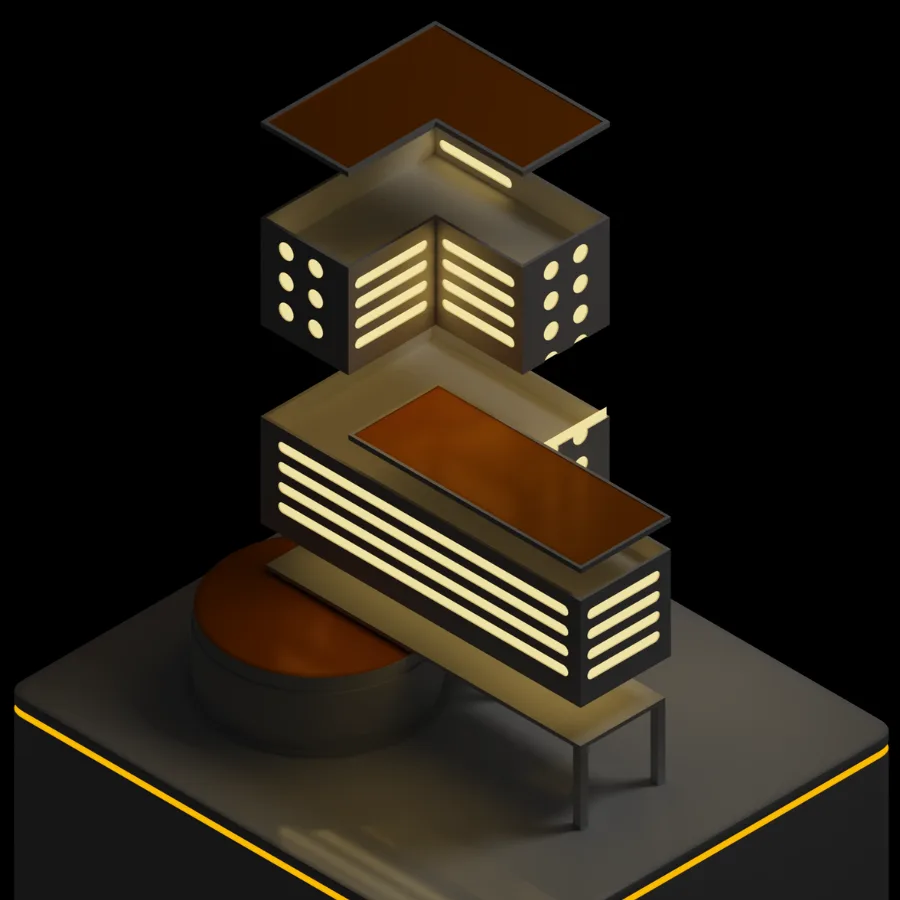
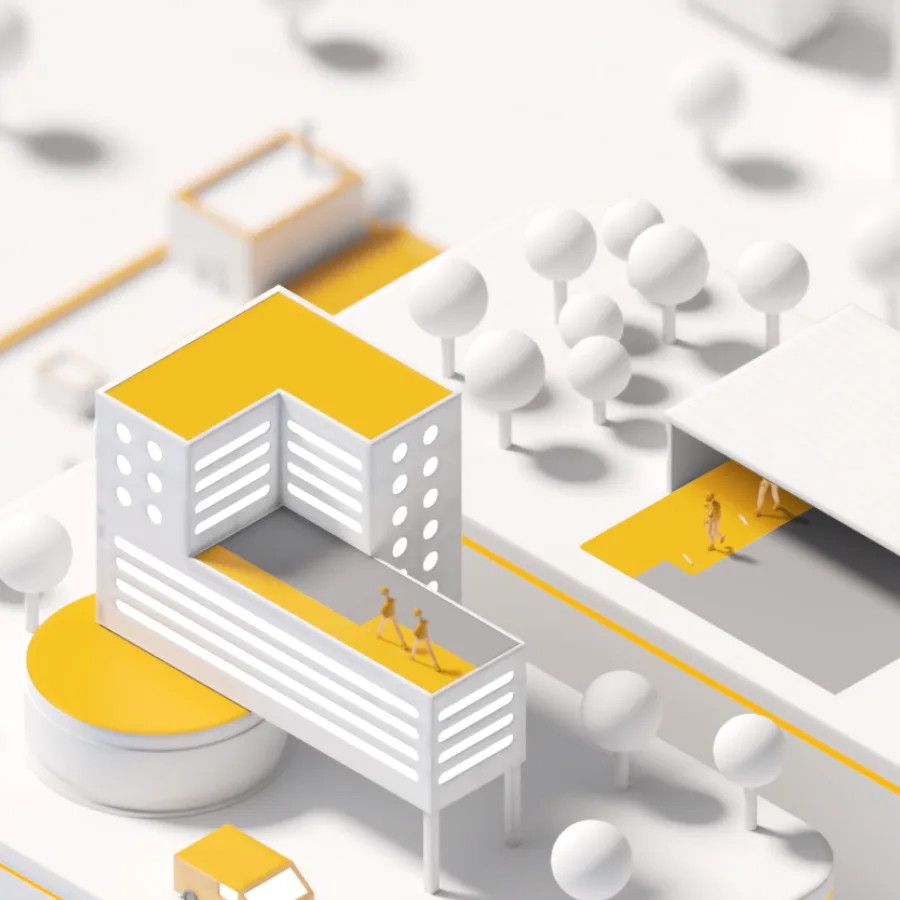
- building level – product application,
- information layer – technical detail.
This makes it possible to adjust the level of detail depending on the audience and use case.
Color logic
A structured color system was applied, where brand colors highlight Sika solutions, while supporting colors provide environmental context.
Modular asset system
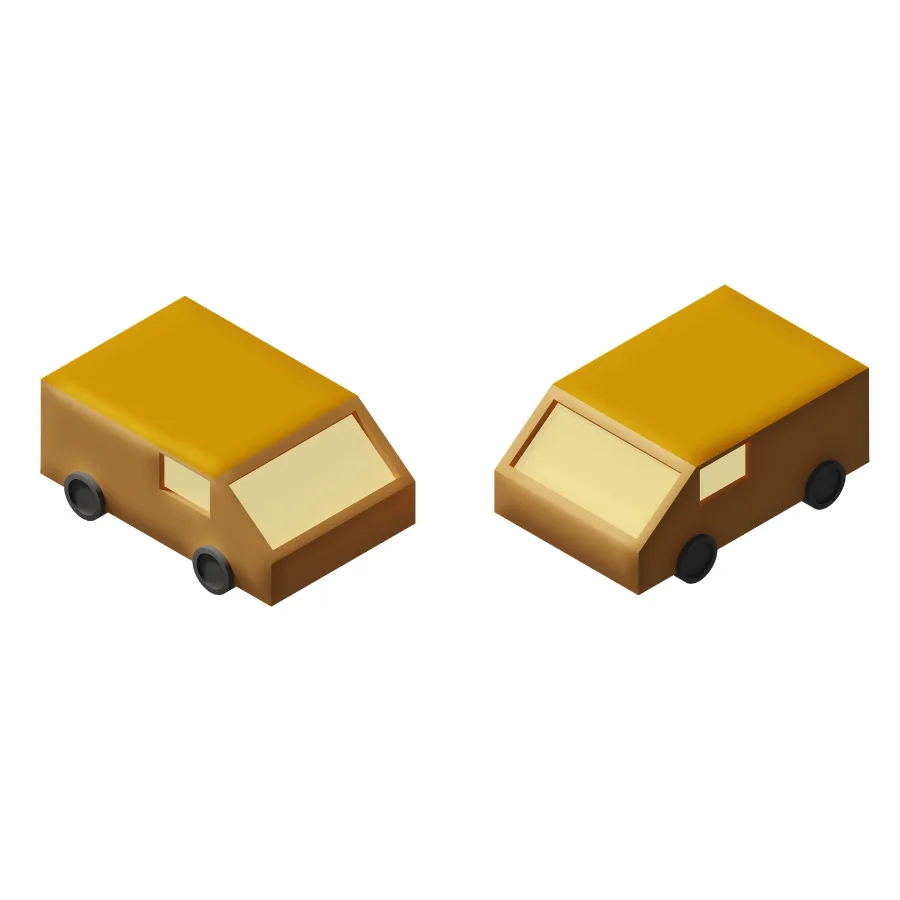
A library of reusable elements was created, including buildings, infrastructure, and informational components. This supports consistency and speeds up content creation.
Animation framework
Animation was used to explain processes and product performance, extending the system into motion and enabling more dynamic storytelling.

Impact
The project introduced a more structured approach to product communication.
As a result:
- communication became more consistent across markets and channels,
- complex solutions are easier to explain to diverse audiences,
- teams can rely on a shared system instead of creating materials independently,
- content production is more efficient due to reusable components.
The system provides a foundation that can be extended over time, supporting future communication needs.

Learnings & Transferability
What worked well:
- showing products in context improves understanding,
- modular systems support scalability and consistency,
- combining illustration and animation helps explain complex processes.
Where this approach is most effective:
- global B2B organizations,
- products that function within larger systems,
- distributed teams creating content across markets.
Where it may be less relevant:
- simple product communication,
- small-scale organizations,
- environments without clear ownership of communication standards.
Let's talk!