April 07, 2026
From Branding to Brand Operating Systems (BrandOS)
Share this article

Branding is no longer about producing a set of assets and handing them over to teams. It has fundamentally evolved into building systems that actually work in day-to-day operations.
Traditional branding approaches tend to fail not because they lack strategic thinking or strong design, but because they simply don’t scale across multiple markets, teams, and touchpoints. As organizations grow, this gap between strategy and execution becomes more visible, leading to inconsistency and inefficiency.
This is where BrandOS comes in: by connecting strategy, design, and operations into one coherent, working system, it enables brands to function as infrastructure rather than decoration.
Companies that make this shift quickly notice tangible improvements faster rollout across regions, higher consistency in communication, and significantly stronger adoption among teams.
Traditional branding is not failing because it is wrong. It is failing because it was designed for a different reality. Years ago, brands operated in relatively stable environments: fewer markets, fewer channels, and more centralized decision-making. Today, that context no longer exists.
Modern organizations operate across multiple regions, cultures, and platforms simultaneously. Teams create content daily, often independently, and the speed of communication has increased dramatically. In this environment, static brand guidelines simply cannot keep up. They become outdated, ignored, or inconsistently applied.
The real cost of inconsistent branding goes far beyond visuals. It directly impacts business performance. Brand dilution is not just an aesthetic issue; it’s a measurable financial risk. In fact, 52% of senior professionals in mid-sized and large organizations report that poor brand consistency costs their companies more than $6 million annually in lost revenue (A joint study by InnerView & FocusVision), highlighting how misalignment across teams and markets translates into real economic loss.
At Admind, we observe this especially in global B2B organizations: the issue is not lack of strategy or design. It is the inability to operationalize them at scale.
The shift is not about improving branding. It is about redefining what branding is.
For years, branding has been treated as a deliverable: something you create, approve, and distribute. But in reality, brands today need to function more like operating systems, continuously guiding decisions, behaviors, and outputs across the organization.
This means moving from something passive to something active. From something owned by marketing to something embedded in how the company operates.
A Brand Operating System it’s a fundamentally different way of structuring how branding works inside an organization. Instead of being something you create and hand over, BrandOS becomes an integrated system that connects strategy, design, and day-to-day operations into one cohesive framework.
In practice, this means that branding no longer lives in presentations or guidelines alone. It operates as an ecosystem where every element is connected and usable in real situations. Strategy directly informs design, design seamlessly feeds execution, and governance ensures that everything evolves consistently over time. Rather than asking teams to “follow the brand,” BrandOS enables them to work within it.
It also aligns with how we approach branding at Admind. Designing not just identities, but systems that can scale across complex, international organizations.
👉 The key takeaway: BrandOS turns branding from something you deliver into something that actually runs inside the organization.
A critical, yet often overlooked, outcome of a system-based approach like BrandOS is the shift in internal ownership. When branding is governed effectively, it stops being “owned” by a single department and starts being shared across the organization. Instead of enforcing compliance, you create a sense of responsibility, teams don’t just follow the brand, they actively contribute to it.
This is not just a cultural benefit. It has measurable impact. In a study of over 750 brand, marketing, and design professionals, 69% said they want greater ownership over how their brand is developed and managed (Frontify, What is brand ownership & why is it important for your company?). This signals a clear shift: employees don’t want stricter rules, they want clarity, tools, and the ability to act within a system.
What’s more, this ownership translates directly into business value. According to Forrester, organizations that cultivate brand culture and actively support brand adoption generate an additional $473,200 in value over three years. The connection is simple: when people understand the brand, they use it better, and when they use it better, the business performs better.
BrandOS enables this by making the brand understandable and usable in everyday work. Through governance, tools, and education, employees gain a clear understanding of what the brand stands for, how it creates value, and why consistency matters. Over time, branding shifts from being perceived as “logos and colors” to becoming a shared business asset that drives alignment, efficiency, and growth.
👉 The key takeaway: when people understand and co-own the brand, consistency stops being enforced—and starts happening naturally.
BrandOS does not operate as a linear project with a clear beginning and end. It works as a continuous loop. This is essential, because brands don’t exist in static environments. They evolve together with the organization: new markets emerge, products expand, structures change, and expectations shift.
At its core, BrandOS is a modular branding framework that turns complexity into clarity, helping organizations build, launch, and manage their brand with greater consistency, speed, and business impact.
The system operates as a loop:
Diagnose → Define → Design → Activate → Govern → Optimize
Each stage feeds into the next, creating a system that improves over time rather than degrading after launch.
But what makes BrandOS different is that it’s not a single product, tool, or service. It’s a system that connects multiple layers of the organization, from strategy through design to execution and transformation.
It becomes particularly critical in moments of change, what we call transformation triggers. These are situations where traditional branding typically breaks:
In these moments, the challenge is not creating a new identity. It’s ensuring that the brand works consistently across increasing complexity. BrandOS provides the structure to manage that complexity without slowing the organization down.
👉 Key takeaway: BrandOS is not something you implement once. It’s a system that continuously supports how your organization grows, adapts, and operates.
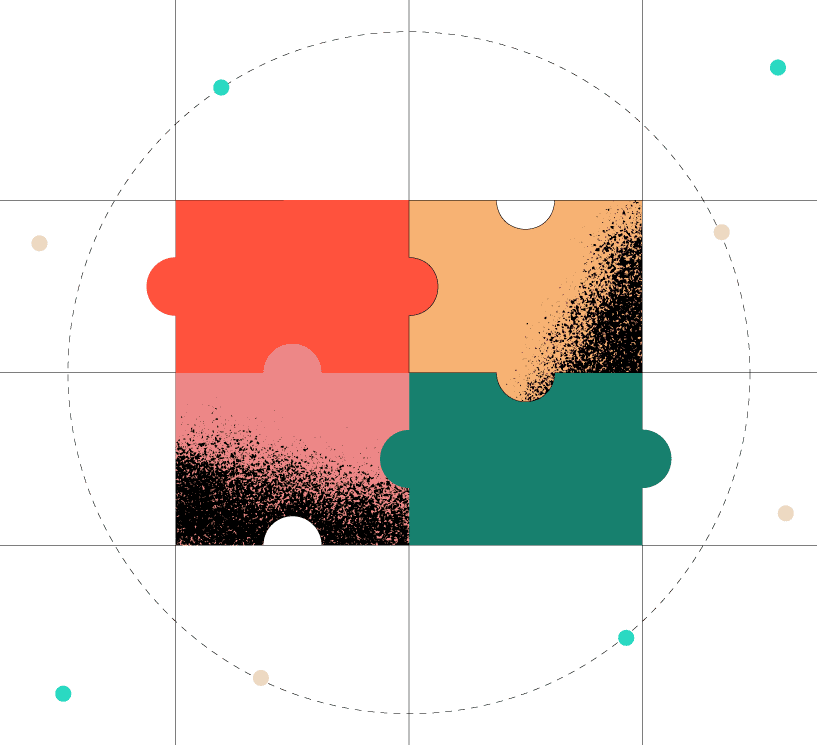
To make BrandOS actionable, it operates across four interconnected layers. These layers ensure that branding is not fragmented but fully integrated into the organization.
This layer defines the foundation: what the brand stands for and how it creates value.
Here, strategy is translated into tangible systems that teams can use daily.
This is where the brand comes to life through real outputs, campaigns, and assets.
This layer ensures that everything remains consistent, measurable, and scalable over time.
The key insight is that most organizations focus almost exclusively on design (System Architecture), while neglecting governance and execution, leading to failure at scale.
The most visible change is not aesthetic. It is operational.
Organizations move from fragmented, inconsistent execution to a structured and scalable system. Teams gain clarity, processes become faster, and duplication of work is significantly reduced.
Based on our experience working with global organizations, implementing system-based branding leads to measurable improvements in both speed and efficiency.
No. BrandOS represents a fundamentally different approach.
From different perspectives, its value becomes clear:
One of the most frequent objections is: “We already have brand guidelines.”
While guidelines are useful, they are not sufficient. They describe what the brand should look like, but they do not ensure that it is applied correctly across the organization.
Without governance, ownership, and tools, guidelines remain passive documents.
Another objection is perceived complexity. BrandOS does introduce structure, but that structure replaces existing chaos, rather than adding new complications.
The most effective way to begin is not with a redesign, but with a diagnosis. Most organizations instinctively jump into changing visuals or messaging, but without understanding where the system is actually breaking, this often leads to more confusion, not less.
A structured diagnosis helps identify gaps between strategy and execution: where inconsistencies appear, where ownership is unclear, and where teams lack the tools to act effectively. This allows you to prioritize what truly matters and avoid investing time and budget in areas that won’t solve the core problem.
If the answer to any of these is no, the issue is not creative, but systemic.
At the same time, you don’t need to start with a full transformation. A practical first step is to look at one of the most visible symptoms: visual consistency. It’s often the easiest way to uncover deeper structural issues in how the brand operates.
We offer a free visual consistency check, which gives you a quick, objective view of how aligned your brand is across touchpoints and where the biggest gaps are. While it’s a simple entry point, it often reveals much larger system challenges underneath.
👉 The key takeaway: start small, but diagnose systemically, because even small inconsistencies are usually symptoms of a bigger structural issue.
The need for BrandOS is driven by one simple factor: scale.
As organizations grow, they become more complex. More markets, more teams, more touchpoints. Without a system, this complexity leads to fragmentation and inefficiency.
This is why branding must evolve, from something that represents the company to something that actively supports how it operates.
Working with organizations operating across 70+ markets, we’ve seen a consistent pattern: companies that treat branding as a project struggle with rollout, while those that treat it as a system scale effectively.
At Admind, branding is treated as a management tool, one that enables alignment, speed, and clarity across the organization.
This approach is particularly critical during moments of transformation: mergers, rebrands, and international expansion.
Today’s CEOs are increasingly looking beyond their traditional industries to drive growth. Over 40% report that their companies have already entered new sectors in the past five years, (PwC’s 29th Global CEO Survey) and among those planning major acquisitions, nearly half expect to expand into entirely different industries, highlighting how business growth is becoming more complex and cross-sector by design.
Let’s move your brand from something that looks good to something that actually works.