June 04, 2026
13 min read
Nation Branding and the World Cup 2026 – what every brand strategist should learn
Share this article

In the summer of 2026, more than five billion people worldwide will spend a month looking towards the United States, Canada and Mexico. This is not because they have suddenly developed an interest in North American politics or architecture. It is because the 2026 FIFA World Cup is set to be the largest media spectacle in sporting history, and one of the most complex branding operations imaginable.
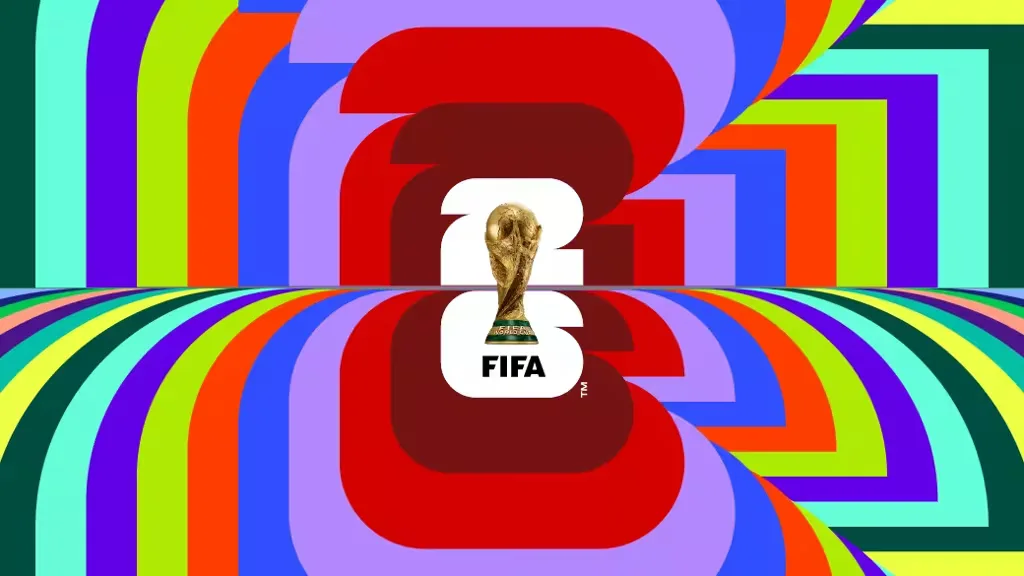
Source: FIFA World Cup 26™ Official Brand unveiled
The World Cup is not just football. It is an unstoppable narrative machine that lasts for weeks, in which the host country becomes the protagonist of a story watched simultaneously by billions. It is an opportunity to change perceptions, create new associations and become a meaningful brand, or a trap from which it is very hard to escape unscathed. What can we learn from it? More than you might expect.
Before we discuss strategy and identity systems, it is important to understand the enormous scale of the event. According to FIFA, more than five billion people (almost two-thirds of the global population) watched the 2022 World Cup in Qatar. The final was watched by 1.5 billion people simultaneously. No advertising campaign, product launch or corporate event comes close to achieving such reach.
And the 2026 World Cup will be even bigger. For the first time ever, 48 national teams will compete (up from 32), meaning more countries will be emotionally invested, more local media markets will be involved, and more broadcast hours will be required. On top of that, a unique experiment will take place: for the first time ever, three countries, the United States, Canada and Mexico, will co-host the tournament. From a branding standpoint, this is an unprecedented situation.
Matches will be played across 16 cities spread over more than 5,000 kilometres. These include New York, Los Angeles, Dallas, Miami, and Boston in the United States; Vancouver and Toronto in Canada; and Mexico City, Guadalajara, and Monterrey in Mexico. Each of these cities has its own distinct brand, narrative, and visual identity, yet they must all work together to create a coherent tournament experience.
Host nation branding refers to the strategic communication, visual and experiential actions that a country takes when hosting a major international event. It’s not just about a tournament logo or the colour of a volunteer’s shirt. Rather, it is about the overarching narrative that a country constructs around itself for the duration of the event, which it then attempts to embed in the collective memory of the spectators.
Economists and brand researchers refer to this as “soft power“: the indirect, intangible influence that a country can exert on public opinion through culture, sport and values. World-class sporting tournaments are one of the most effective ways to activate this form of influence. Put simply, for one month, the whole world is watching, and you have a chance to show them who you are.
Yet it is a double-edged sword. History shows that hosting a World Cup can build a country’s brand for decades or painfully expose its weaknesses if the branding promises something that is not delivered to arriving fans and the media.
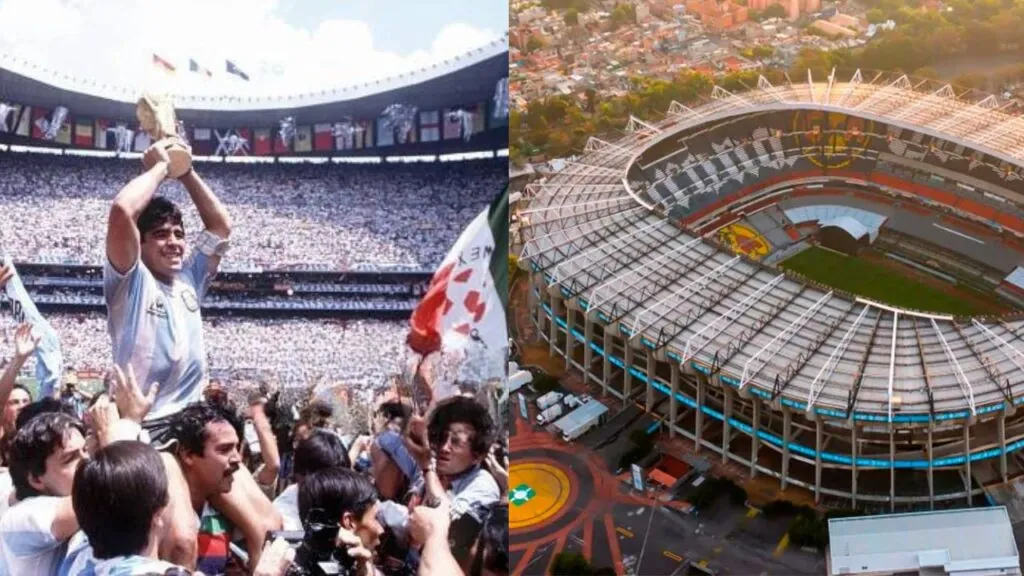
Even before the term ‘nation branding’ entered the political and marketing lexicon, countries were already using the World Cup as a platform to shape their image. The 1970 tournament in Mexico, the first to be broadcast globally in colour, presented the country not merely as a host, but as a modern, culturally vibrant gateway between Latin America and the wider world. For millions of viewers, this was the first World Cup they had experienced through vivid colour, cinematic television production and a visual atmosphere unlike anything football had seen before, rather than through radio commentary or black-and-white highlights.
Source: Top 5 Highest-Capacity Football Stadiums in the World – Life After Football
The tournament took place at a pivotal technological and cultural moment. Satellite broadcasting dramatically increased the tournament’s international reach, helping to transform it from a major sporting event into a truly global shared media experience. Football was no longer primarily followed by local supporters and national audiences; it became a worldwide spectacle unfolding in real time across continents. In many ways, Mexico 1970 was the moment the World Cup entered the age of mass global culture.
Its visual identity played a crucial role in that transformation. The tournament’s graphic language drew heavily on late-1960s modernism and psychedelic design, incorporating bold typography, concentric patterns, saturated colours and optical motifs inspired by contemporary design trends and elements of Mexican visual culture. The visual memory created by stadium imagery, sun-drenched crowds, Aztec references and the electric atmosphere inside the Estadio Azteca felt distinct from the more formal, utilitarian tournaments that preceded it.
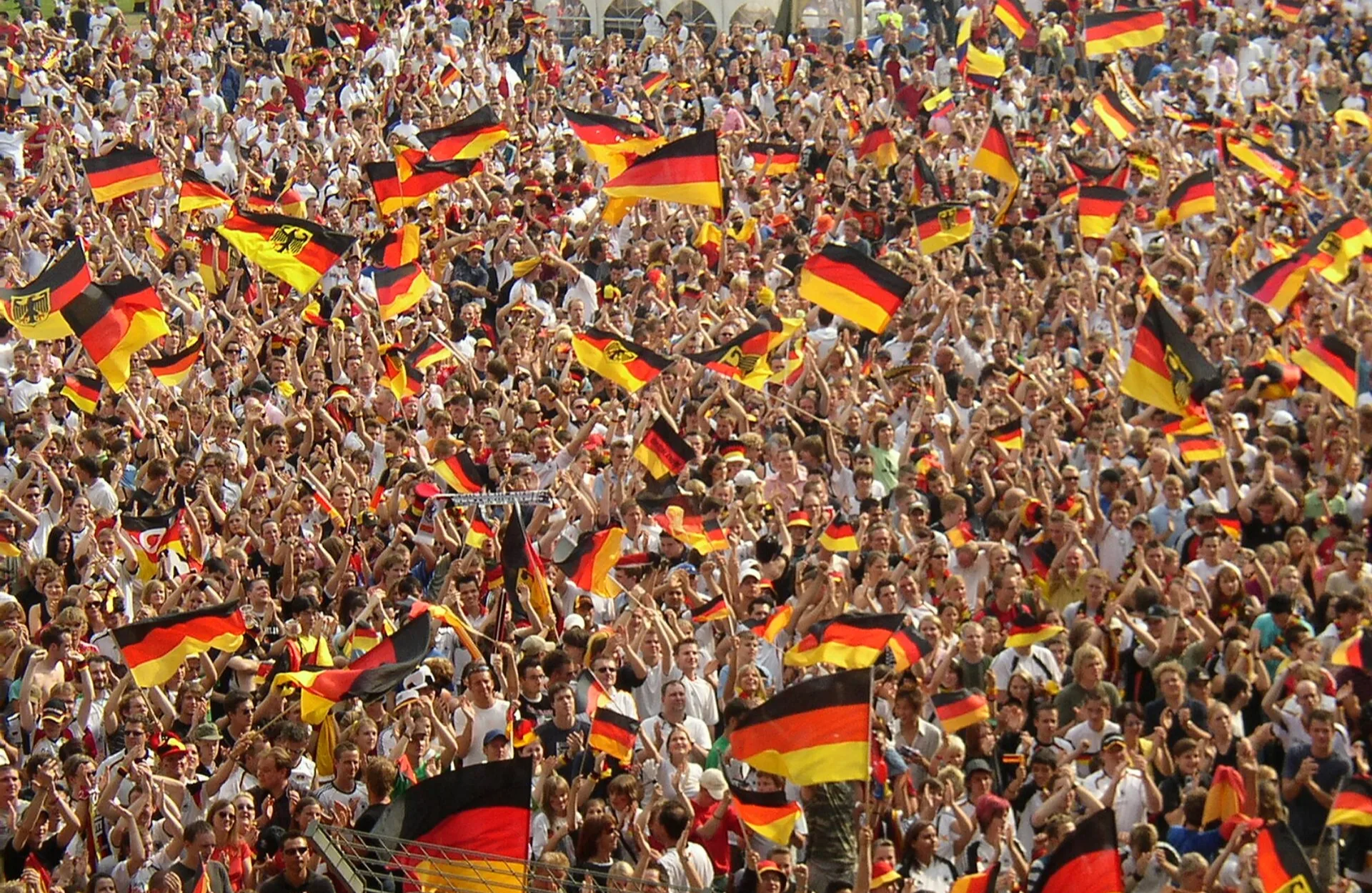
Germany did not simply approach the 2006 World Cup as a sporting event; it was also seen as an opportunity to reshape the country’s emotional perception. The official slogan, ‘A Time to Make Friends’, signalled a deliberate departure from older international stereotypes of Germany as a rigid, distant or history-burdened nation. For decades after the Second World War, overt displays of German patriotism remained a culturally sensitive issue both domestically and abroad.
Source: Photo/Map: Arne Müseler / arne-mueseler.com / CC-BY-SA-3.0
Yet, during the tournament, German cities were transformed into huge public celebrations, complete with black, red and gold flags, fan festivals, outdoor screenings and a relaxed, welcoming atmosphere, which were watched by millions around the world. Crucially, this patriotism did not appear aggressive or nationalistic, but rather civic, open and inclusive. Repeatedly emphasising the warmth of the hosts and the celebratory mood surrounding the tournament, international media coverage helped to recast Germany as modern, cosmopolitan and emotionally confident.
Unlike many short-term image campaigns, the perception shift created during Germany 2006 proved to be remarkably durable. The tournament showed that successful host nation branding can do more than improve a country’s reputation abroad — it can also reshape how a nation perceives and expresses its identity.
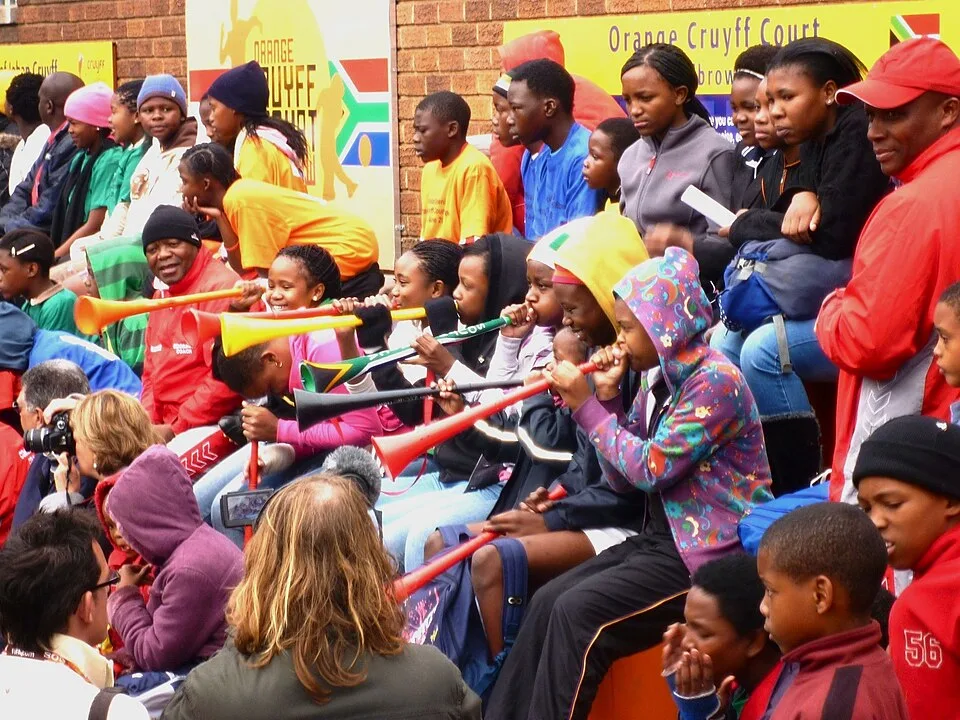
South Africa was the first African country to host the World Cup, and it ensured that this fact formed the core of its narrative, rather than merely being a statistic. The slogan ‘Feel It, It Is Here’ combined national pride with an invitation to the rest of the world to rediscover the continent. The vuvuzela, a plastic instrument which many Western commentators described as irritating, became a global symbol of African football culture and is still widely recognised today.
Source: Wikimedia
Rather than trying to pretend to be something it was not, South Africa embraced its authenticity and pride in its own identity. Instead, it opted for authenticity and pride in its own identity. Despite grappling with serious infrastructural and social challenges at the time, the result was one of the most coherent instances of host nation branding in tournament history.
As the country with the strongest footballing tradition in the world, Brazil had its narrative ready before a single match was played: ‘The home of football welcomes the world.’ The official slogan, ‘All in One Rhythm’, attempted to present football as part of a broader picture of Brazilian joy, music and diversity.
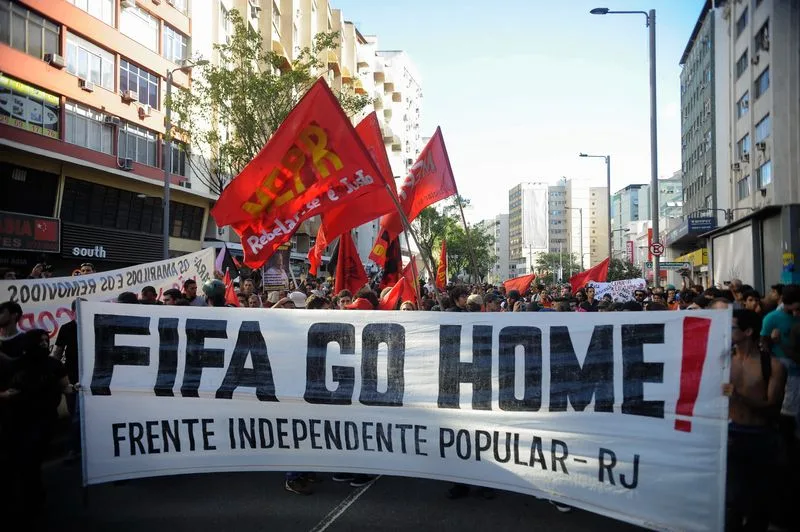
However, mass social protests were raging in the streets. Millions of Brazilians were demonstrating against the estimated cost of organising the tournament, which was put at over 11 billion dollars, while the country was struggling with serious deficiencies in education and healthcare. Cameras broadcasting the matches also captured images of near-empty stadiums and unfinished infrastructure, and the final, in which Germany thrashed the hosts 7–1, became a global meme.
Source: Wikimedia
Brazil 2014 is a cautionary tale about branding that cannot function in isolation from the broader context. When the narrative is beautiful but the reality contradicts it, brand credibility can collapse faster than any campaign can rebuild it.
Russia deliberately used the 2018 World Cup to improve its image. After years of growing diplomatic isolation, the Kremlin hoped that weeks of coverage showing smiling Russians, happy fans and well-functioning infrastructure would help to rebuild positive associations with the country. The slogan ‘The Energy of the Game’ was deliberately neutral, focusing more on sporting emotion than on Russia as a destination.
The campaign was partially successful: the media briefly wrote about a ‘surprisingly welcoming’ Russia, and visitors praised the organisation. However, the effect was short-lived. The image constructed around the tournament was not rooted in any authentic, long-term national narrative, it was a façade. The lesson is that branding which has no basis in a brand’s real identity does not survive a crisis.
The 2022 World Cup in Qatar was arguably the most complex and controversial example of a host nation’s branding in the history of the tournament. Qatar’s strategic goal was clear: to transform its image from that of a petrochemical state to that of a cultural hub of the Middle East and a gateway to the region.
The official narrative and visual identity were meticulously crafted, incorporating elements such as the slogan ‘Now is All’, stadium architecture referencing Arabic calligraphy and Bedouin tradition, and a rich programme of cultural events. However, the tournament was simultaneously engulfed in a constant media storm concerning human rights, the conditions of migrant workers and LGBTQ+ issues.
What was the result? Image research shows that perceptions of Qatar around the world after the tournament are deeply polarised, the country gained visibility, but at the cost of negative associations becoming entrenched in many areas of public opinion worldwide. This demonstrates that host nation branding does not operate in isolation: visual and narrative coherence is insufficient when there is profound dissonance in underlying values.
Against this backdrop, the 2026 World Cup represents a completely new experiment. For the first time ever, the tournament will be organised not by one country, but by three simultaneously: the United States, Canada and Mexico. From a branding perspective, this presents an unprecedented opportunity and challenge: how can one coherent identity be built from three distinct national narratives?
Unveiled by FIFA in May 2023 at the Griffith Observatory in Los Angeles, the official visual identity of the tournament centres on a single strong element: the World Cup trophy embedded within the number ’26’. This number is made up of 48 modular squares and quarter-circles, representing the 48 competing nations and the geometry of the football pitch.
Notably, for the first time since 1990, the words ‘World Cup’ are absent from the main logo. The trophy is so globally recognisable that FIFA has decided it needs no label. This is a bold branding decision.
The colour palette has been universalised to black, white and gold tones in the base version. National and city-level colours appear one layer down: red for Canada, green for Mexico and blue for the USA. Each of the 16 host cities has its own version of the logo, with the base symbol enriched by local elements, such as Pacific waves in Los Angeles, the Golden Gate Bridge in San Francisco and the New York skyline.
‘This is not just one tournament with one flag. It is sixteen tournaments with one heart”, a phrase that encapsulates the philosophy behind the identity system.
From an architectural standpoint, the system is intelligent: it is a strong, single visual platform (the ’26’ mark, the trophy), with space for local variations. This approach is well known in corporate branding, where a master brand is used alongside a flexible sub-brand system for individual units. FIFA has applied this typically corporate tool to manage organisational complexity on a continental scale.
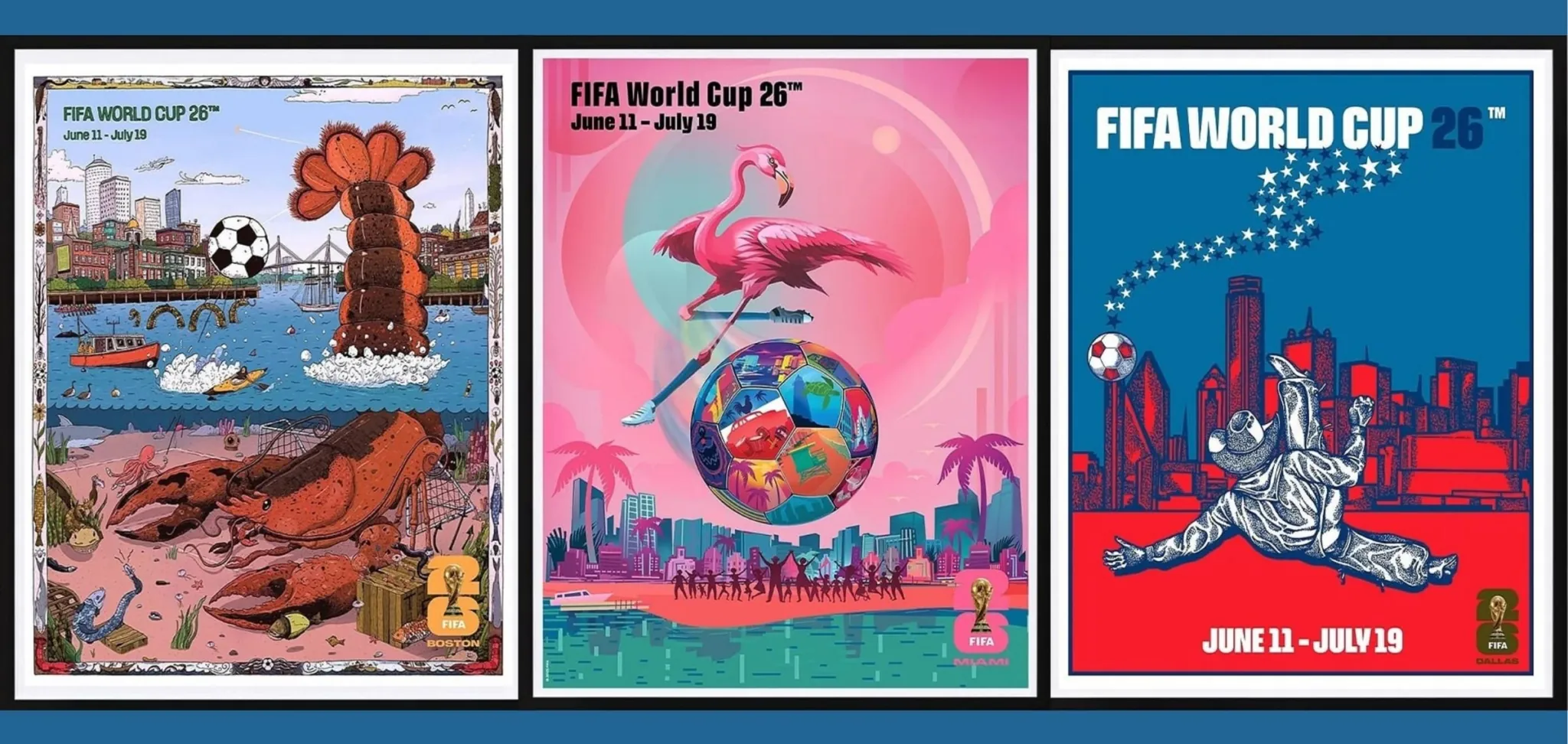
In March and April 2025, FIFA unveiled a series of 16 official host-city posters, each created by a local artist. Three of these artists, Carson Ting from Canada, Minerva GM from Mexico and Hank Willis Thomas from the United States, collaborated on the official tournament poster, combining their different visual styles and cultural backgrounds to create a unified piece.
Source: FIFA Unveils Official 2026 World Cup Host City Posters – Life After Football
This was a strategic as well as an aesthetic decision: rather than imposing a single style from FIFA headquarters, the organisers handed the narrative to local artists. The result is diverse and occasionally provocative, but above all authentic. You cannot manufacture authenticity from a central office; it is far easier to allow it to flourish by creating space for those who embody it naturally.
However, the 2026 World Cup also highlights another aspect of modern host nation branding: the increasing tension between global spectacle and local fan culture. Rising ticket prices, soaring accommodation and transport costs, and the enormous geographical scale of the tournament are positioning the World Cup increasingly as a premium entertainment product rather than a sporting ritual accessible to all. This tension is particularly evident in the United States, where professional sports have long been part of a highly commercialised entertainment ecosystem centred on sponsorship integrations, broadcast optimisation, half-time shows, and advertising.
Football has traditionally resisted some of these structures, its uninterrupted halves and supporter culture form part of its identity, but the 2026 World Cup may be the clearest sign yet that the tournament is evolving from a fan-centred competition into a globally monetised media platform. From a branding perspective, this creates both opportunity and risk: while commercial scale expands reach, excessive distance from supporters can erode the emotional authenticity that gives sport its cultural power in the first place.
By analysing the history of successful and unsuccessful tournaments, it is possible to identify a set of principles that determine the effectiveness of this form of brand-building. Interestingly, these principles correspond almost exactly to what we know about effective commercial branding.
The most memorable tournament identities grow out of the genuine identity of the host country, rather than what the country wants to appear to be. South Africa’s vuvuzelas, for example, were not planned as part of the visual identity, but they became iconic because they were authentic. Brands that try to construct an image that is disconnected from their real identity always risk having that façade demolished by reality, whether in the form of camera lenses, fan tweets or journalistic investigations.
An effective tournament identity is not just one logo, but an entire ecosystem comprising colours, typography, mascots, posters, music, stadium architecture and volunteer uniforms, as well as city wayfinding. Each of these elements is a brand touchpoint, either building or eroding experiential coherence. The 2026 World Cup recognised that the complexity of a system is a strength, not a weakness, by giving each city its own logo and posters created by local artists, provided the master brand is strong enough to hold everything together.
A logo should be the final step, not the first. Before designing a logo, you need to know what you want to communicate and to whom. Countries that approached the World Cup purely as a graphic design project ended up with meaningless identities. Those that started by answering the question, ‘How do we want the world to see us after this tournament?’, had a chance at creating something lasting.
One of the hardest challenges in branding at a mega-event is managing communication directed both inward (to one’s own citizens, workers and volunteers) and outward (to tourists and the international media) simultaneously. Brands that focus exclusively on their external image often forget that their own citizens are their loudest ambassadors — or critics. Brazil 2014 learnt that lesson the hard way.
A World Cup lasts a month. A country’s brand lasts decades. The most effective host nation branding strategies treat the tournament as a catalyst for a long-term narrative, an entry point to a story that the country intends to continue telling for years. South Africa, for example, effectively built its 2010 narrative into long-term tourism and investment initiatives. Despite its flawless visual identity, Qatar is still grappling with the question of what remains from ‘Now is All’ four years later.
Mega sporting events provide a unique opportunity to test branding strategies in challenging conditions, including enormous scale, tight deadlines, global real-time observation, and uncontrollable political and cultural contexts. This is precisely why lessons from host nation branding are valuable for anyone working on brand building, regardless of project scale.
The 2026 World Cup, involving 16 cities and three host countries, does not hide its complexity; it highlights it as a positive feature. The diversity of cities, cultures and artists does not fragment the tournament brand, but enriches it, making it deeper and more multidimensional. In corporate branding, the temptation is to simplify, standardise and smooth everything out. However, brands that have the courage to acknowledge and manage their internal complexity intelligently build a deeper connection with audiences than those that offer only a monolithic façade.
The ‘master brand + local variations’ system used by FIFA in 2026 is a standard approach employed by branding agencies working with global corporations. It involves a strong central brand, space for local adaptation and a system of rules rather than a uniform template. Brands that do not build such systems, instead producing ad hoc materials for every occasion, pay for it with visual incoherence and lack of recognition, regardless of their budget.
FIFA did not design authenticity into the 2026 World Cup; rather, it created the conditions in which authenticity could emerge by giving space to local artists and allowing cities to speak in their own voices. The same principle applies to brand communication: you cannot script authenticity. However, you can hire the right people, give them the necessary tools and freedom, and allow the brand to be expressed through them rather than through a central marketing department.
Qatar and Russia demonstrated that a tournament’s visual identity can be shaken by controversy. Resilience against crisis does not come from design perfection, it comes from the depth and credibility of the values on which the brand is built. Brands with genuinely clear values that they consistently uphold survive crises. Those built on aesthetics alone generally do not.
Every tournament has a logo. Not every tournament has a story. The difference between the two is the same as the difference between a brand you recognise and a brand you remember. A logo is form. Narrative is content. Form without content is hollow, even if it is beautiful. Content without form is invisible, even if it is valuable. The best branding, in both sport and business, does not prioritise one over the other. It develops them both simultaneously.
When the last match of the 2026 World Cup ends in July, life in the 16 host cities will return to normal. The stadiums will be empty, the cameras will have left and the viral moments will have drifted to the furthest corners of the internet. However, the image of each host country , the United States, Canada and Mexico, will be different from before the tournament. Better, worse, deeper, more complex — it depends on how well each country manages its narrative during those intense few weeks.
This is the fundamental question of every host nation’s branding effort and of branding efforts in general: what remains when the noise dies down? What permanently settles in the minds and hearts of those who paid attention, however briefly?
The answer does not lie in the logo. It lies in whether there is something real behind it.