May 21, 2026
9 min read
In-house, agency or hybrid? Which brand management model is right for you?
Share this article
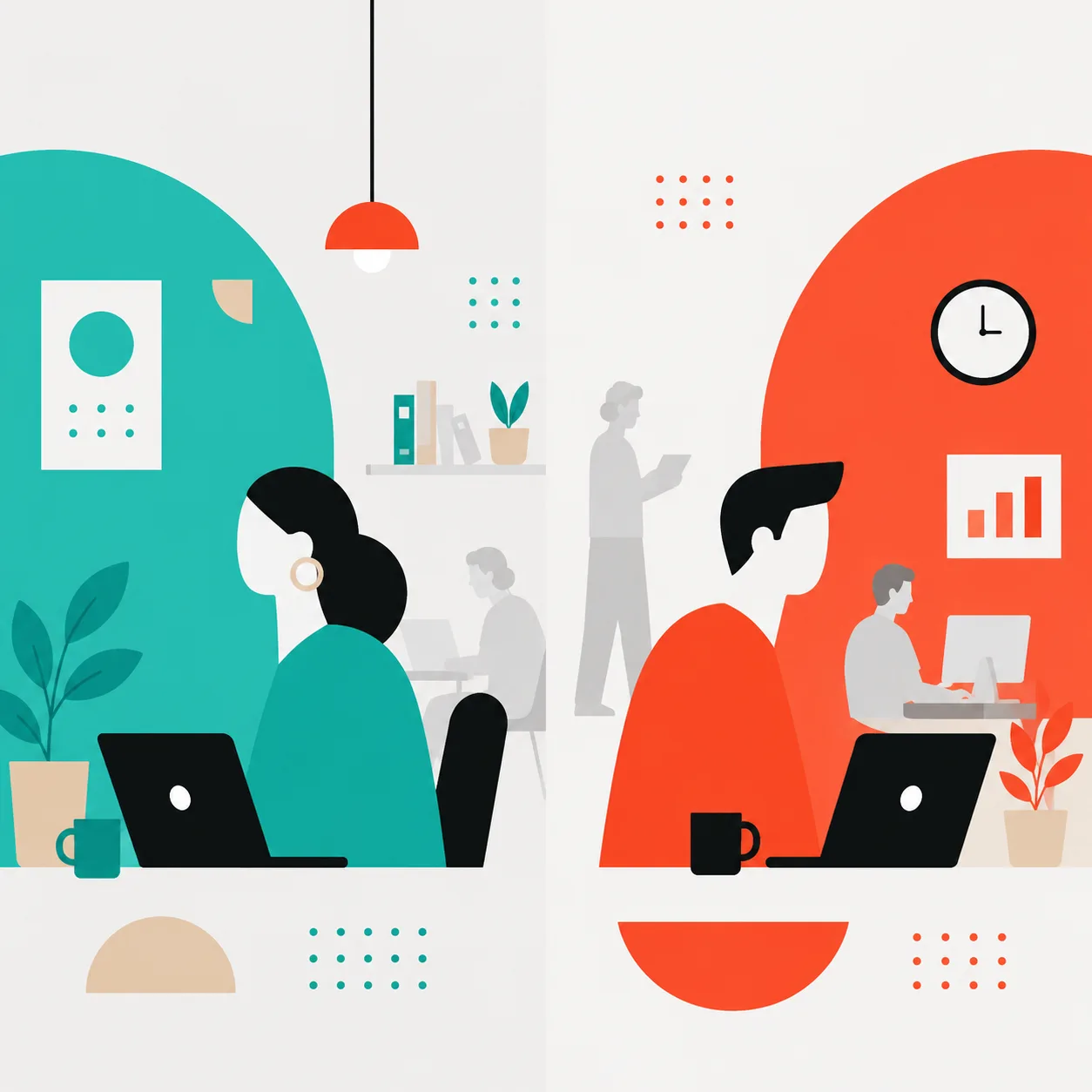
Your brand is your most important business asset. However, how it is managed will determine whether it drives growth or merely occupies budget.
Most leaders approach this as a question of cost: monthly payroll versus agency retainer. Having sat across the table from enough CMOs and brand directors, we know that this is the wrong place to start.
The real question is which model will make your brand work effectively. It must be adopted, consistent and scaled across every market, team and touchpoint, not just for the purpose of looking good in a presentation deck.
We’re going to walk you through each model, being honest about the costs that rarely appear in a business case. By the end, you’ll have a clear framework for choosing the model that best fits your brand’s current position and future goals.
In-house teams offer one advantage that agencies cannot fully replicate: proximity to your company’s culture. Your people didn’t just read the brand book. Instead, they helped write it. They understand exactly how your values are translated from boardroom decisions into daily execution across teams.
This advantage is most evident in culturally complex brands, where the product, employer brand and customer experience must all feel like part of the same world. For that kind of coherence, internal ownership is hard to beat.
The most valuable thing an agency can offer isn’t creativity; it’s the external perspective that your internal team has lost due to structural changes. We’re not saying this to sell you something. We’re saying it because we repeatedly see that even great in-house teams stop challenging the brand after eighteen months in the same way that an outside eye would.
Research from McKinsey in late 2025 confirms what we observe in practice: branding is reasserting itself as a top strategic priority for global organisations, but only when it is paired with operational execution, rather than being delivered as a creative output alone. The right agency partner closes that gap.
Professional agencies treat confidentiality as a core operational requirement rather than a legal formality. Look for three layers.
Firstly, there is legal accountability: non-disclosure agreements (NDAs) are the baseline.
Secondly, there are clean-room protocols: leading agencies keep teams working on your brand physically and digitally separate from those working in adjacent sectors.
Thirdly, and perhaps counterintuitively, you benefit from working with an agency that understands your competitive landscape. They use pattern recognition to help you stay ahead of market shifts, rather than exposing your strategy.
For most of the global organisations we work with, the hybrid model has become the norm and for good reason. It’s not a compromise between two imperfect options. It’s a deliberate structural choice, combining internal Brand Guardians who embody the culture with external Brand Advisors who provide systems thinking and strategic depth.
When implemented effectively, this approach offers the best of both worlds, combining speed and strategy with cultural authenticity and market objectivity.
There’s no single formula. The right split depends on your organization’s size, maturity, and the brand challenge you’re solving. We work this out in detail with every client individually, and the proportions vary significantly. Sometimes they’re even reversed.
We’ve found that the 70/30 framework is the most practical starting point.
In this configuration, the 70% belongs in-house, covering the daily pulse: social media assets, internal communications, sales support materials, and minor website updates – work that demands cultural alignment, speed, and constant availability. This is where proximity pays off.
The remaining 30% belongs with the agency for strategic evolution: high-level brand strategy, global rebranding, major market launches, creative audits, and brand governance. This work requires an outsider’s perspective, multidisciplinary expertise, and the systematic objectivity that proximity naturally erodes over time.
For brands undergoing an active transformation or entering new markets, this balance often shifts the other way, with the agency carrying the heavier load until the internal team is equipped to take over long-term governance. The goal isn’t a fixed ratio. It’s a model that matches where your brand actually is.
The biggest risk is ‘brand drift’: two teams operating under different assumptions and producing work that eventually feels as though it belongs to two different brands. We have seen this happen in organisations that managed the 70/30 split effectively for the first year, but then gradually lost coherence as the two teams stopped actively aligning.
Addressing this issue requires more than just quarterly alignment meetings. It requires shared infrastructure, a single operational source of truth that connects your internal Brand Guardians with your external Brand Advisors.
This is where a Brand Operating System becomes the structural backbone of the hybrid model. By actively operationalising standards, assets and governance rather than keeping them in a passive archive, BrandOS ensures that everyone is executing the same brand, regardless of which office they work in, which market they are working for or which team produced the last asset.
We have implemented this model with global organisations in the industrial, financial and cultural sectors. It’s not the brands with the best designers that maintain coherence over time, it’s the ones with the best shared infrastructure.
Comparing salary and retainer is the wrong approach.
The meaningful question is total cost of ownership versus strategic return. When we guide clients through this calculation, the outcome is almost always different to that suggested by the initial spreadsheet.
A salary accounts for around 60% of the actual cost of hiring someone internally. To this, add recruitment fees, employer social contributions, benefits, hardware, software subscriptions (e.g. Adobe, Figma and DAM platforms) and office space, as well as your own management time. If you spend five hours a week reviewing and directing a junior designer, include your hourly rate in the brand’s operational budget.
Agency day rates can seem expensive at first glance. However, you’re paying for results, not attendance. There is no idle time, no internal meeting overheads and no recruitment cycle. Rather than paying for one person’s capacity, you’re paying for a system that already has the right tools, talent structure and processes in place.
Focus on the following three lenses:
Stop focusing on aesthetics and start focusing on business outcomes.
Ask these three questions consistently:
Hold quarterly business reviews where the agency must demonstrate how their work has moved measurable business outcomes, not just how it looked.
The right model for you depends on your business’s current stage, your internal capacity and the nature of your brand challenge. While there is no universally correct answer, there is a right answer for your current situation.
Answer these three questions honestly:
Still unsure? A common mistake is to make this decision based on your current workload rather than on the brand challenge you’re trying to solve. If you need to grow your brand across markets, the issue isn’t staffing levels, it’s governance. Start there.
Deciding whether to use an in-house team, an agency or a hybrid model is one of the most important decisions you’ll make for your brand’s future. Using the wrong model not only wastes budget, but also costs you time to market, talent and competitive position.
If you would like to understand what the right structure looks like for your organisation and the potential of a disciplined brand partnership, please contact us here. We’ll help you assess your current position and what you need to achieve your future goals.
We’d also love to hear about the challenges you’re facing in the comments below, many of the most useful questions we receive come from brands that are in the process of making this decision.
→ Want to see what a Brand Operating System looks like in practice? Read about our BrandOS approach — how we structure and scale global brands from strategy through adoption.
→ Not sure where the gaps are in your current brand execution? Book a Free Visual Consistency Audit. We’ll analyse your brand’s presence across touchpoints and show you exactly what you may have grown too close to see.
Sources: